Ideas in progress
Research Notes
Papers that stay with me, questions I am working through, and connections to my research in AI for precision oncology.
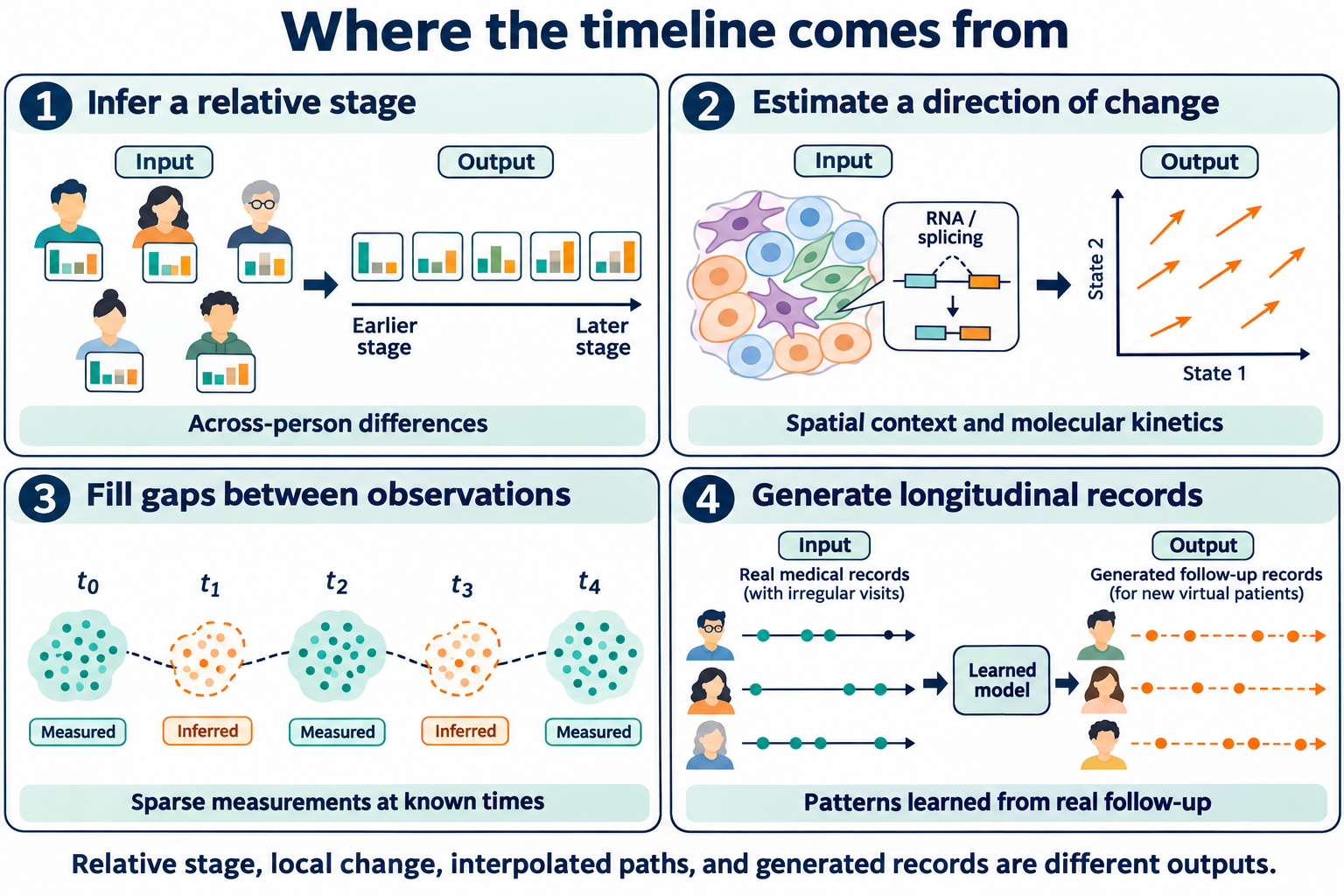
Virtual cohorts and the missing disease timeline
How tissue snapshots, sparse experiments, and clinical histories support different kinds of disease trajectories, and how to choose a useful starting point.
Virtual cohorts · Disease progression · Longitudinal modeling
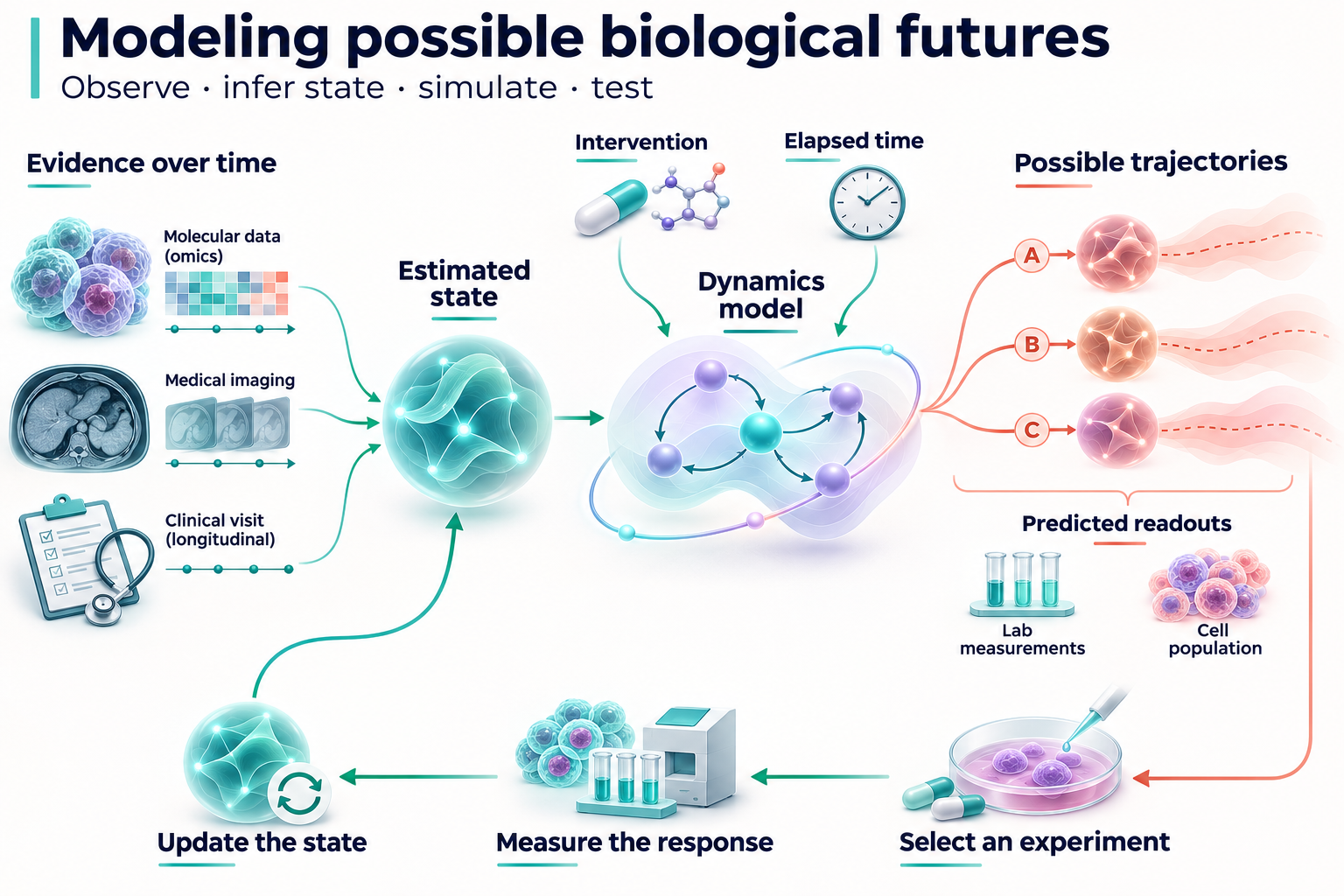
World models in biomedicine
A practical map of patient simulators, imaging dynamics, and cellular response models: how they work, what their data support, and how predictions can guide the next experiment.
World models · Disease dynamics · Perturbation prediction
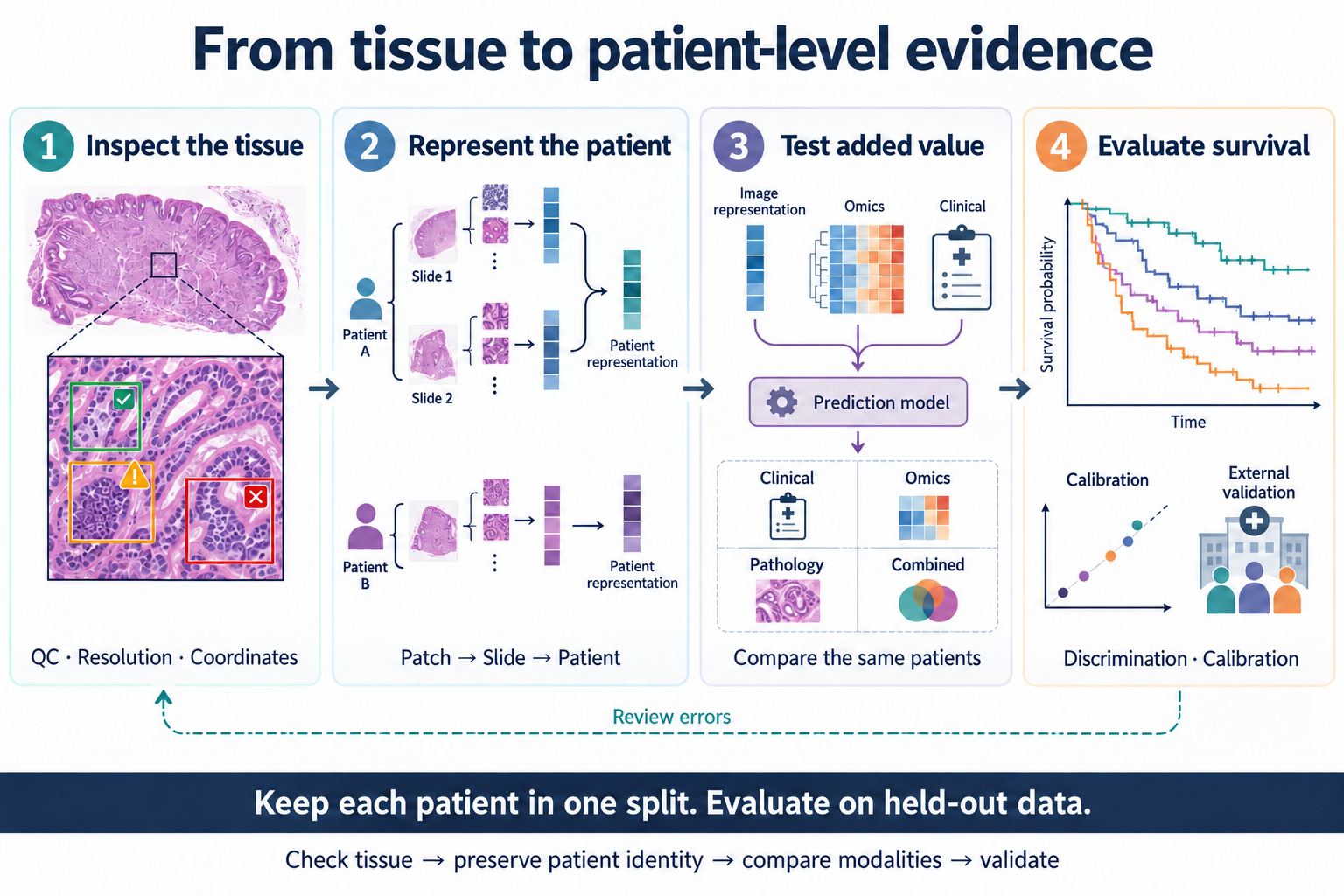
From pathology slides to survival predictions
A practical map of the pathology AI stack: what each tool does, how to choose foundation models, and how the pieces become a patient-level study.
Computational pathology · Open-source tools · Foundation models
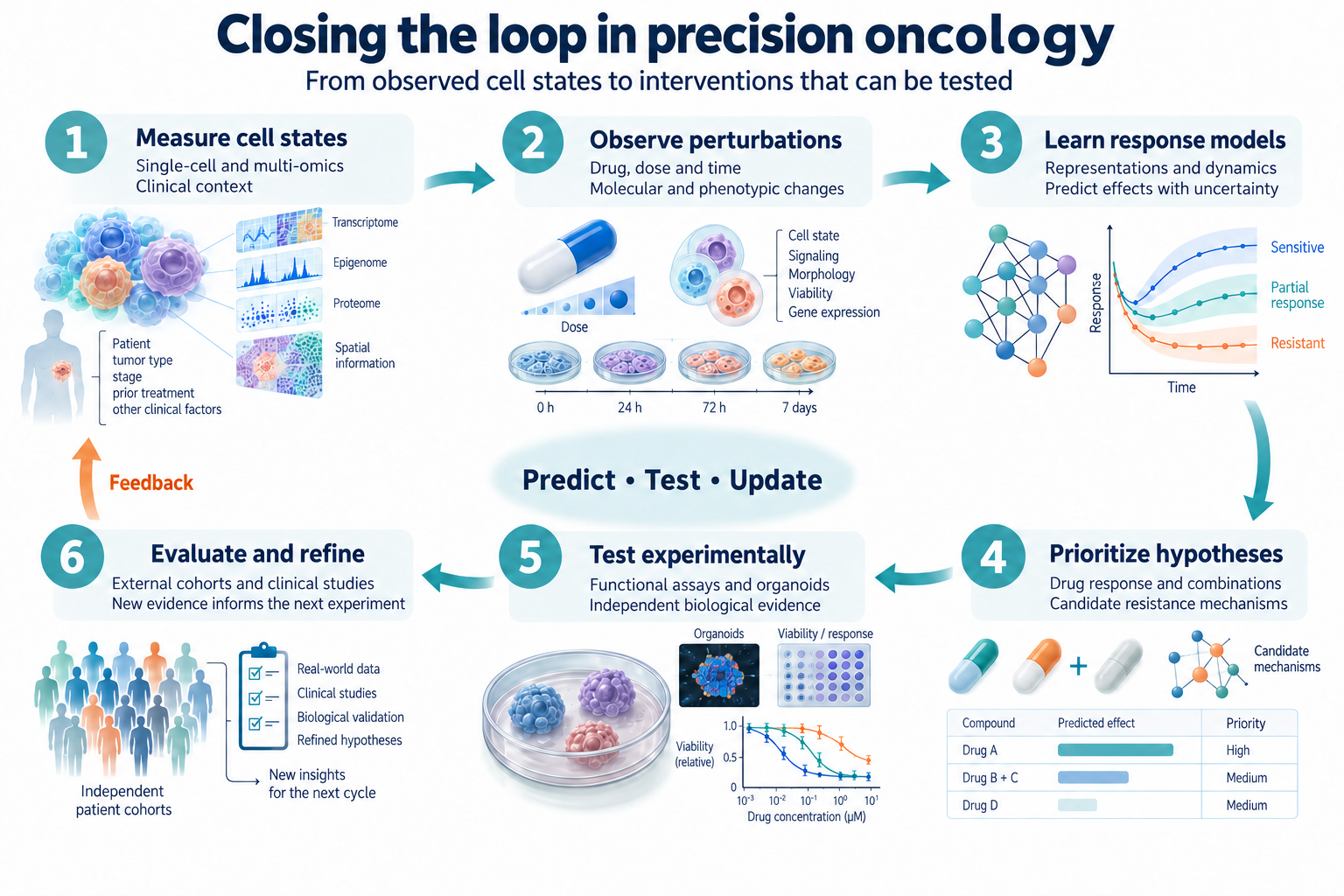
Closing the loop in precision oncology
A practical route from perturbation data to treatment hypotheses, informative experiments, and patient evidence.
Virtual cells · Experimental design · Digital twins