Research Highlight · JCO / ASCO Conference Abstract 2026
Transcriptomic signatures for treatment outcome prediction in renal cell carcinoma
Can tumour RNA profiles add prognostic information beyond routine clinical risk grouping in advanced RCC? This ASCO 2026 poster evaluates transcriptomic signatures within sunitinib and avelumab plus axitinib treatment cohorts, covering survival and disease control.
- Development data
- JAVELIN Renal 101
- Data layers
- RNA expression + clinical records
- Endpoints
- PFS · OS · disease control
From RNA profiles to outcome models
The workflow starts with transcriptome-wide feature selection and builds separate models for survival and disease control. The poster distinguishes internal evaluation from external overall-survival validation, so each result can be read against the task it actually tests.
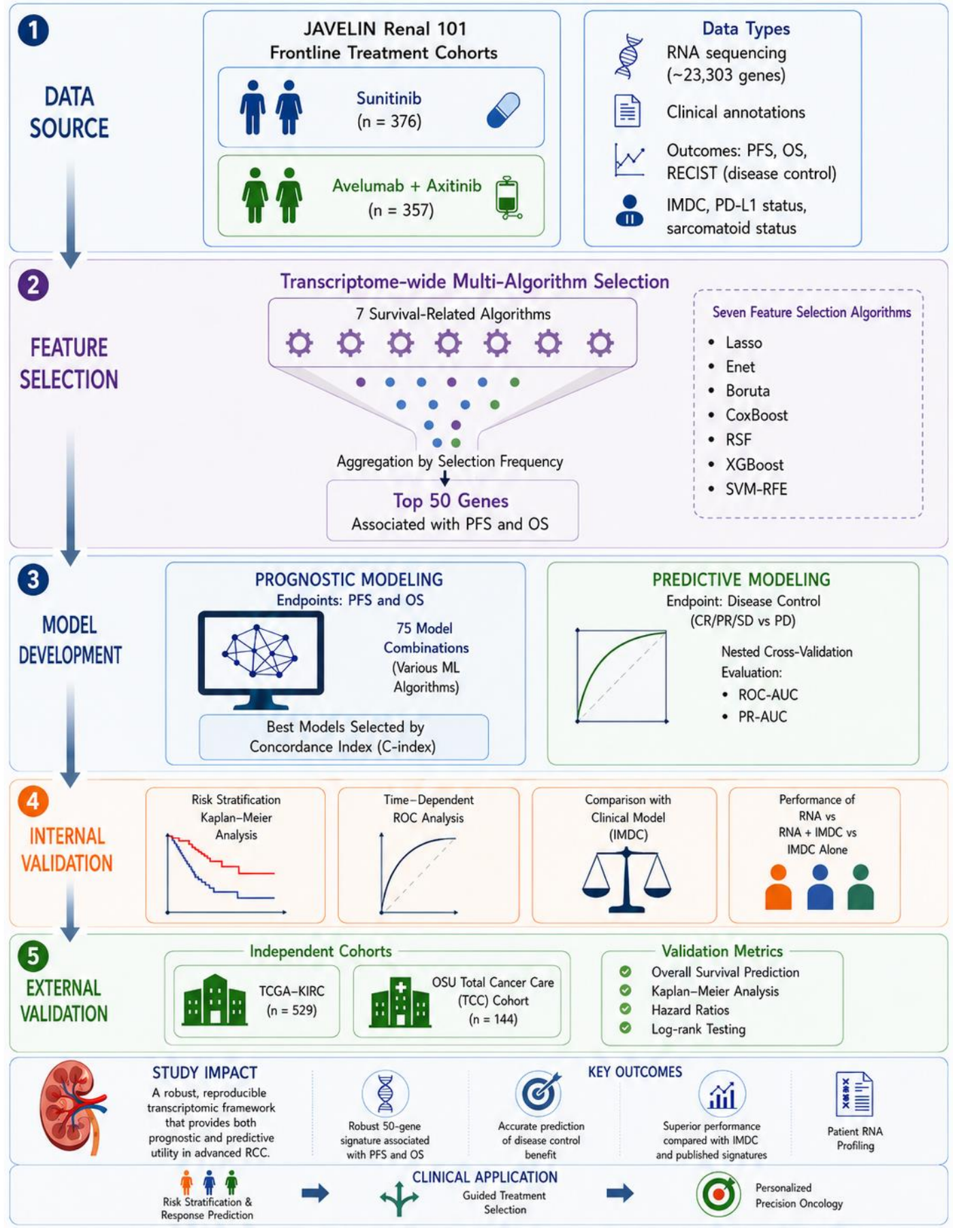
What RNA adds beyond IMDC
The most direct comparison is between RNA-only, IMDC-only, and combined models within the same treatment cohort. In the poster analyses, RNA models showed stronger survival discrimination than IMDC, while adding IMDC to RNA produced little further improvement.
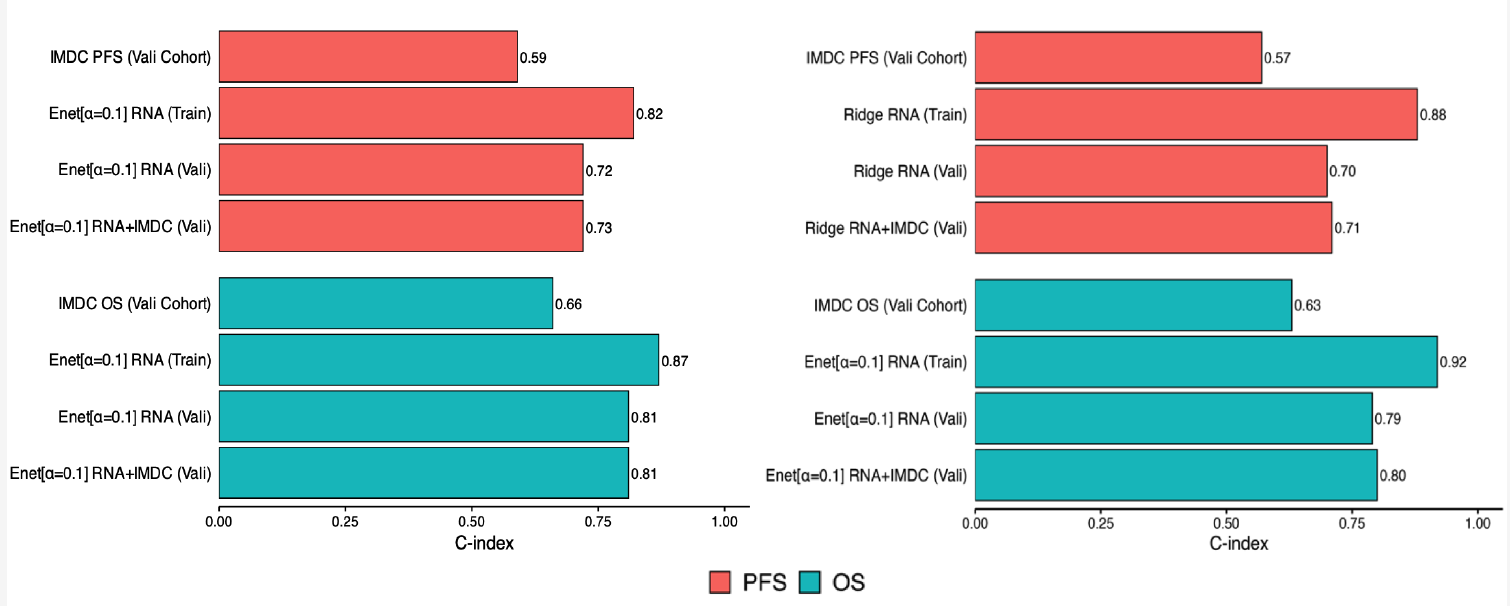
This comparison asks whether clinical grouping adds information once the transcriptomic score is known. Training and validation estimates should be kept separate; performance in a new patient cohort is the relevant test of transfer.
Disease control and validation
PFS-derived classifiers were also evaluated for disease control versus progressive disease, using ROC curves, precision–recall curves, and confusion matrices in holdout data. External OS analyses used TCGA-KIRC and an OSU Total Cancer Care cohort, as shown in the poster workflow.
These analyses support further study of regimen-specific prognosis. Turning such scores into a treatment-selection rule would additionally require evaluating whether they identify differences in benefit between regimens.
The full poster contains the risk-group survival curves, disease-control results, and comparisons with published signatures. A short video presentation walks through the study.
Resources
ASCO Abstract · JCO DOI · Poster PDF · Video · OncoDaily